
Give every page a clear role
A homepage introduces the offer and helps people choose a path. A service page explains the scope. A project page gives context to the work. A contact page makes the next step straightforward. When these roles are unclear, pages often repeat a slogan without answering the visitor’s next question.
Start a page plan with three fields: who is this for, what question does it answer and where should the reader go next? That simple structure makes it easier to choose useful sections and remove content that does not support the page.
Build the hierarchy before adding decoration
People need to distinguish the main message from supporting detail. Use headings, short sections and deliberate spacing to make that hierarchy visible. A large title should introduce a useful idea; it should not carry all the explanation. Supporting copy, examples and specific links do the rest.
Visual variety should support the material. A process can use a sequence, a project can use large artwork and a service can use deliverable groups. Reusing a visual system does not require every page to repeat the same layout.
Design for the mobile decision
On a smaller screen, a visitor still needs to understand the offer, read the content and use the navigation. Check long headings, menu sub-items, image crops and button labels at actual mobile widths. Important artwork may need its full aspect ratio rather than a crop that removes the design.
Test the journey, not just a screenshot. Open the menu, choose a service, follow a related project and return to the contact route. A layout can look polished while a link still leads to the wrong destination or an important interaction remains difficult to use.
Make the content understandable to people and search
Descriptive page titles, meaningful links and organized content help readers navigate. Google’s starter guide also describes clear organization and useful link text as part of a sound search foundation. These practices do not guarantee rankings; they make the site easier to understand and explore. Read the Google SEO Starter Guide.
Write for the question the audience is trying to answer. Explain the service, clarify what is included and give relevant examples. Google’s people-first content guidance emphasizes usefulness to the intended audience. Read the people-first content guidance.
Keep the system practical to maintain
A brand website needs to evolve as the business changes. Use a clear editing structure for headings, images, service details and navigation. Shared elements such as the header and footer should remain consistent across pages, while page content can develop independently.
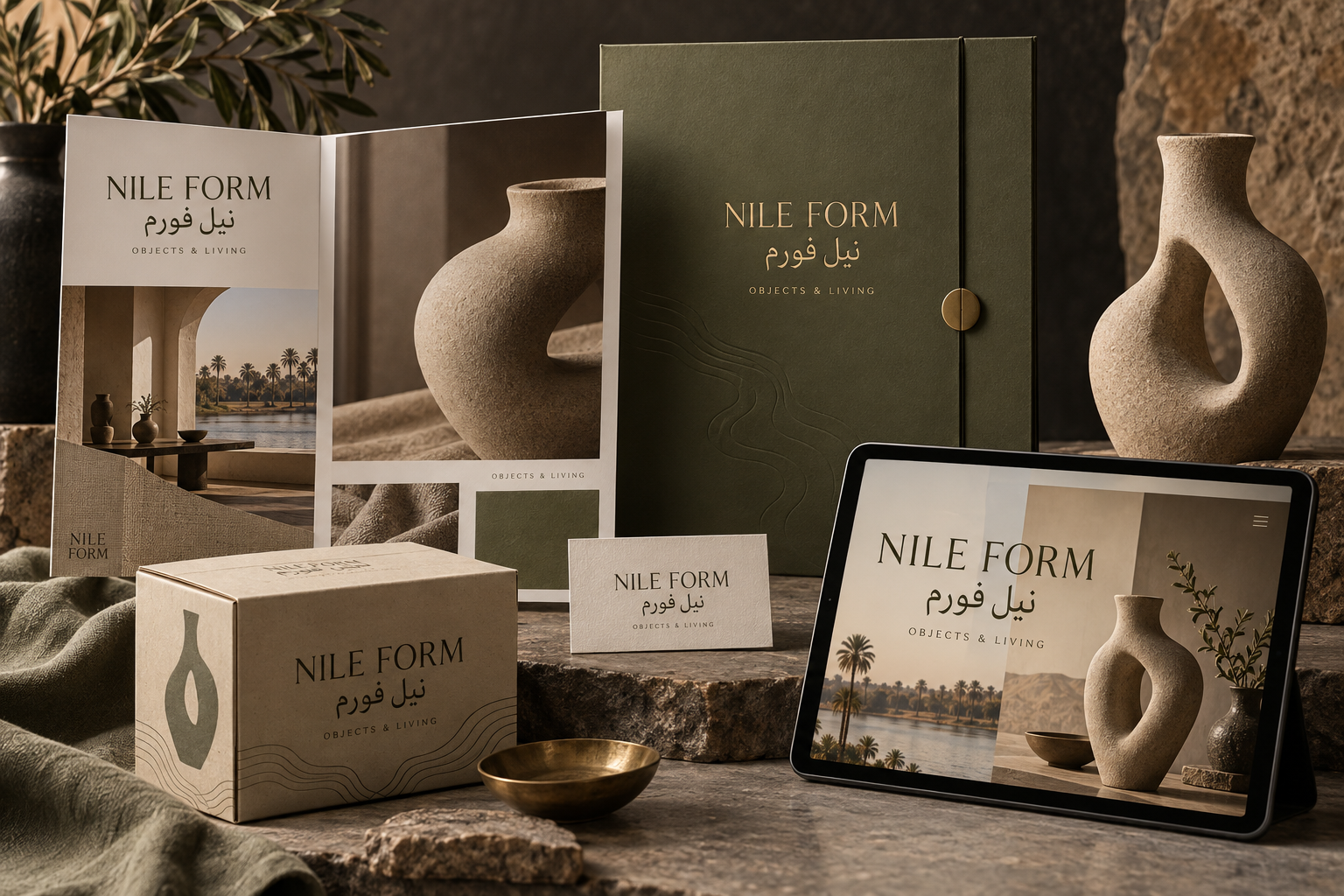
The Nile Form concept explores a visual direction for a fictional décor studio. Turning that direction into a real site would require accurate product information, accessible content, tested navigation and an agreed publishing workflow. The design is the beginning of the experience, not the whole of it.