
Define the change you want to create
“More content” is an activity, not an objective. Start with the change you want: more people understanding a service, more relevant enquiries or better support for a launch. The objective determines what the content should explain and which action belongs at the end.
Keep the objective narrow enough to guide decisions. A post that tries to introduce the brand, explain every service and generate an immediate sale can become difficult to follow. A sequence of focused pieces often creates a more understandable path.
Map the questions before choosing formats
List the questions a person needs answered before taking the next step. What is the offer? Who is it for? What is included? What does the process look like? What do they need to provide? Those questions can become service sections, social themes or editorial topics.
Choose the format after the question. A visual concept may need an image-led presentation, while a service scope may need a clear list and an example. The format should make the answer easier to understand rather than exist only because it is available.
Connect each asset to a useful destination
An introductory post can point to an explainer; the explainer can lead to the relevant service; the service can lead to a clear contact route. This is a content journey. It helps people move at their own pace without making them search for the missing information.
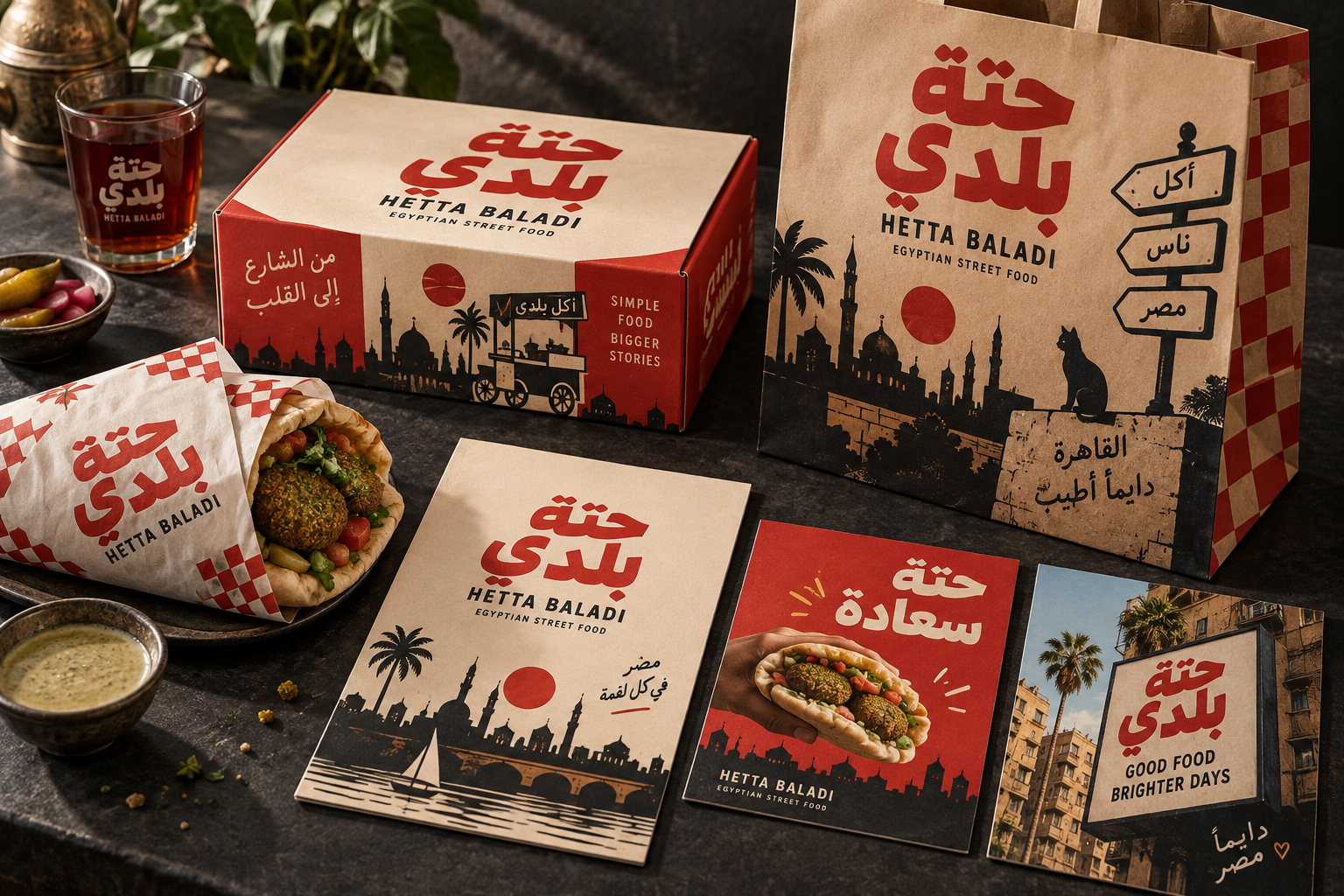
For a fictional food launch, the visual direction might attract attention, but a real campaign would also need accurate offer details and a working route to enquire or order. The Hetta Baladi concept demonstrates artwork only; the operational journey would need to be designed and verified separately.
Separate attention from business outcomes
Reach, interactions, website visits and enquiries describe different stages. They should not be treated as interchangeable evidence of success. Define which actions matter to the objective and what information is available to assess them.
Google Analytics allows events that matter to a business to be marked as key events. The event definition and implementation still need to match the intended action. A button click is not automatically a completed sale or a qualified enquiry. See Google’s guidance on key events.
Review one useful question at a time
A review should produce a decision. Ask whether the message was clear, the destination answered the question or the next step was easy to find. When comparing variations, record what changed so the discussion has context. Avoid treating a small observation as a universal rule.
Maintain a short improvement list: clarify the offer, strengthen an example, simplify a page or test a different headline. Prioritize changes that address a specific problem. Content becomes more useful when the learning changes the next round of work.